 Indicator 1
Rejection of the democratic rules of the game |
Score 1 of 3
-
Degrelle, whom the book calls "a virulent critic of parliamentary democracy", leads Rex into its first general election, on 24 May 1936
|
Score 2 of 3
-
Rex wins 21 of the 202 seats in the Chamber and 11.5 percent of the vote. Degrelle himself is not elected
-
On 27 July 1936 he meets Mussolini in Rome and Rex takes subsidies from the Fascist regime. On 26 September Hitler and Ribbentrop receive him in Berlin, and limited German money follows, according to the US Holocaust Memorial Museum
|
Score 2 of 3
-
He calls a rally in Brussels for 25 October, announced as a march on the capital inspired by Mussolini's March on Rome of 1922, and says 250,000 Rexists will come. The government bans it
|
Score 3 of 3
-
He has a Rexist deputy in Brussels and all the deputy's substitutes resign, which forces a by-election, and runs for the seat himself
-
Time magazine, in its issue of 22 March 1937, quotes him: "I must have all power or nothing" and "When I take the power, within the next year, I shall keep it for the rest of my life"
|
Score 1 of 3
-
He puts his challenge to the Brussels voters, as the law allowed, and on 11 April 1937 loses
|
Score 2 of 3
-
As its support fell away in the late 1930s, Rex "became more radically antidemocratic", according to the US Holocaust Memorial Museum
|
Score 1 of 3
-
On 2 April 1939 he is elected to the Chamber for Brussels, while his party falls from 21 seats to 4
|
 Indicator 2
Denial of the legitimacy of political opponents |
Score 2 of 3
-
On 2 November 1935, at Kortrijk, he and a group of Rexists interrupt a congress of the Catholic associations, and he denounces political corruption and the "banksters"
-
Rex's slogan for the 1936 election: "Contre tous les partis, contre tous les pourris, votez Rex" (against all the parties, against all the rotten ones, vote Rex)
|
Score 2 of 3
-
After the vote he goes on attacking the "rotten ones" (les pourris) who, he says, run Belgium's political and economic establishment
|
Score 2 of 3
-
Time reports that he threatens to bring 250,000 Rexists to Brussels on chartered trains to "sweep out the van Zeeland Government"
|
Score 2 of 3
-
The same Time report of 22 March 1937 quotes his motto: "Balayer le pourri!" (sweep away the rotten)
|
Score 0 of 3
-
The sources used for this page record no new statement from him about his opponents between the cardinal's condemnation of 9 April and the count
|
Score 1 of 3
-
On 28 July 1937 he makes a series of accusations about payments the prime minister had received from the National Bank. A finance ministry inquiry reports on 18 August that van Zeeland was paid 330,000 francs, legally, and his government leaves office in November 1937
|
Score 0 of 3
-
The sources used for this page record no new campaign by him against the legitimacy of his opponents in these months
|
 Indicator 3
Toleration or encouragement of violence |
Score 0 of 3
-
At Kortrijk the Rexists block the exits of the hall. The sources used for this page record no injuries there, and no violence by Rex in the 1936 campaign
|
Score 0 of 3
-
The sources used for this page record no violence by Rex in these months
|
Score 2 of 3
-
About 5,000 Rexists come on 25 October 1936 despite the ban. Time reports that they fought with walking sticks fitted with razor blades, and that the government's cavalry charged out of side streets with sabres. Shots are fired and kill nobody; 78 people are injured and nearly 300 briefly jailed
|
Score 0 of 3
-
The sources used for this page record no violence by Rex during the by-election campaign
|
Score 0 of 3
-
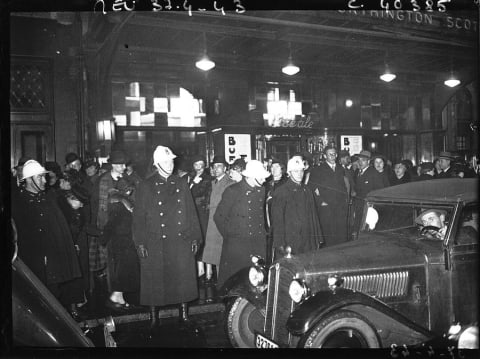
Police stand guard at a Rexist office in Brussels, where a press agency photographed what it called a demonstration. The sources used for this page record no injuries
|
Score 0 of 3
-
The sources used for this page record no violence by Rex in these two years
|
Score 0 of 3
-
None recorded in the sources used for this page
|
 Indicator 4
Readiness to curtail civil liberties of opponents, including media |
Score 1 of 3
-
The Kortrijk meeting he breaks up on 2 November 1935 is a congress of another party's associations; his group of Rexists blocks the exits while he speaks
|
Score 0 of 3
-
Out of government, Rex has no power over anyone's liberties. Its programme calls for a stronger executive and a corporatist state, which the sources used for this page do not date
|
Score 0 of 3
-
The sources used for this page record no act by Rex against the press or the liberties of its opponents in October 1936
|
Score 0 of 3
-
None recorded in the sources used for this page
|
Score 0 of 3
-
None recorded in the sources used for this page
|
Score 0 of 3
-
None recorded in the sources used for this page
|
Score 0 of 3
-
None recorded in the sources used for this page
|
 Indicator 5
Who could still hold him to account
Added, not from the book |
Score 0 of 3
-
On 20 November 1935 Cardinal Jozef-Ernest van Roey forbids Catholic priests to associate with Rex
-
The Catholic Party sets up the Catholic Youth Front in December 1935 to win back the young Catholics Rex had drawn, according to the book
|
Score 1 of 3
-
The largest parties cannot agree on a government until King Leopold III presses them. On 13 June 1936 van Zeeland forms a cabinet of Catholics, Socialists and Liberals that leaves Rex and the Flemish nationalists out
-
Scored 1 for the money from Rome and Berlin: patrons abroad whom no Belgian voter or court could call to account
|
Score 1 of 3
-
On 6 October 1936 he signs a secret agreement with Staf De Clercq, leader of the Flemish nationalist VNV, which had won 16 seats in May
-
The government bans the 25 October rally and, Time reports, stops the railways from running the chartered trains
|
Score 0 of 3
-
The three governing parties, Catholic, Liberal and Socialist, agree not to run candidates of their own. The prime minister, Paul van Zeeland, stands against Degrelle himself, and the Communists back him too
|
Score 0 of 3
-
On 9 April 1937 Cardinal van Roey formally condemns Rex and tells Catholics not to abstain
-
On 11 April van Zeeland wins the seat with 76 percent of the vote to Degrelle's 19
|
Score 0 of 3
-
The VNV suspends its agreement with Rex on 25 June 1937 and ends it on 17 September
|
Score 0 of 3
-
On 2 April 1939 voters cut Rex from 21 seats to 4. On 10 May 1940, the day Germany invades, the Belgian government has him arrested with others it suspects would help the invader
|